ScoreMarch Group
Admissions & educational consulting
Know thyself. Then let them know you.
Strategy, essays, extracurriculars inside $70B+ firms, a personal brand, and mentors from leading universities in thirteen countries.
Admissions & educational consulting
We help students become genuinely interesting, then make it unmistakable: real work inside $70B+ global firms, essays in their own words, a personal website, and an SAT score earned in our own Academy.
Book a consultation to talk now, or join the waitlist to hold a place for the next opening.
Admitted Columbia · Cornell · Williams · Carnegie Mellon · Bowdoin
Our students were admitted to
Our students were admitted to Columbia University, Cornell University, Williams College, Carnegie Mellon University, Bowdoin College, Yonsei University, Korea University, The University of Alabama, Tel Aviv University, Reed College, Macalester College, Kenyon College, University of Rochester, Temple University Rome, Michigan State University, Stony Brook University (SUNY), University at Buffalo (SUNY), University of Vermont, Miami University, John Jay College of Criminal Justice (CUNY), leading universities in China, American universities in Qatar, and American universities in the UAE.
By the numbers
25+ universities our students go to, in seven countries; a mentor network in thirteen; an SAT score guaranteed in contract; and an SAT record drawn from official College Board reports.
Admissions
25+1
Universities our students go to, in 7 countries
Guarantee
1450+2
SAT score guaranteed in contract (Advanced plan; Base 1350+)
Extracurriculars
$70B+
Valuation of the global firms where students do real work
ScoreMarch Academy
14503
Median SAT · 46 students since Dec 2022
Mentor network
13
Countries in our mentor network
Our instructor
15804
Our SAT instructor’s superscore
How we count
SAT® is a trademark registered by the College Board, which is not affiliated with, and does not endorse, this website.
Temet nosce · Know thyself
“Essays, activities, test scores, recommendations are a medium to convey who you are. Many students ask us about how they can craft a compelling narrative. We have one answer: Become an interesting and a genuinely passionate person in whatever you’re doing. The rest comes along.”
Temet nosce is the Latin form of “know thyself,” the maxim inscribed in Greek at the Temple of Apollo at Delphi. It sits beneath our crest because it comes before everything else.
Group & Academy
ScoreMarch Group shapes the applicant. ScoreMarch Academy prepares the score. Work with one house, or with both.
ScoreMarch Group
Know thyself. Then let them know you.
Strategy, essays, extracurriculars inside $70B+ firms, a personal brand, and mentors from leading universities in thirteen countries.
ScoreMarch Academy
Your score, guaranteed in writing.
One-on-one, both sections, three to six months, with an instructor who superscored 1580. Your score is guaranteed, with terms fixed in the contract before lessons begin.
Each house enrolls separately.
What we build
Anyone can call themselves curious or driven. We help students build the proof, in six disciplines.
School list · calendar
Where to apply, when, and why. A school list built on fit and evidence, and a calendar built backward from every deadline.
You write every word
Your story, in your words. We ask the questions that find it, then refine each draft until it could only be yours.
Six sectors
Projects, internships, shadowing, and applied research inside global firms, from airlines to data centers.
See the engineWebsite · network · portfolio
A personal website, a professional network, and a public record of your work. When someone searches your name, they find substance.
Alumni · students
Alumni and current students of leading universities in thirteen countries, who made the choices you are facing now.
See the networkEnrolled separately
One-on-one preparation with an instructor who superscored 1580. Guaranteed 1350+ or 1450+, with terms fixed in the contract before lessons begin.
The March
Every engagement follows the same five steps. The fifth stroke closes the tally, and most regular-decision letters arrive in March.
Your dossier and a first conversation: who you are, what you love, and where you stand.
Done whenWe can say in one sentence what makes you interesting.
A school list, a testing plan, and a calendar built backward from every deadline.
Done whenEvery deadline, test date, and task sits on one calendar.
The real work: a project inside a $70B+ firm, a personal website, a mentor, and SAT preparation with the Academy if you need it.
Done whenThere is real work to point to, not just a title.
Essays you draft and we question, line by line, until every sentence sounds like you on your best day.
Done whenEach essay could only have been written by you.
Applications filed, interviews rehearsed, and every deadline met.
Done whenThe last application is in. Then, March.
Four strokes and a slash: the tally on our crest, and the shape of every engagement.
Book a consultationWhere our students goAdmissions
Our students go to Columbia, Penn, Cornell, Brown, Williams, Carnegie Mellon, Yonsei, and beyond. Every arc on this map, from Samarkand, ends at a real admission.How we count: scholarships include need-based financial aid, because most of these universities are need-aware for international students.
The map couldn’t load. Every place on the map is listed below.
Arcs run from Samarkand to every university our students go to. Select a point for details.
Admitted · ScrollSkip

Admitted
New York, USA
An Ivy League university, and New York’s oldest: founded in 1754 as King’s College.
Photo: Ajay Suresh from New York, NY, USA · CC BY 2.0 (photo source and license, opens in a new tab)

Admitted
Philadelphia, USA
An Ivy League university in Philadelphia, founded by Benjamin Franklin.
Photo: Bohao Zhao · CC BY 3.0 (photo source and license, opens in a new tab)

Admitted
Ithaca, USA
An Ivy League university in Ithaca, New York, founded in 1865 by Ezra Cornell and Andrew Dickson White.
Photo: eflon from Ithaca, NY · CC BY 2.0 (photo source and license, opens in a new tab)
Admitted
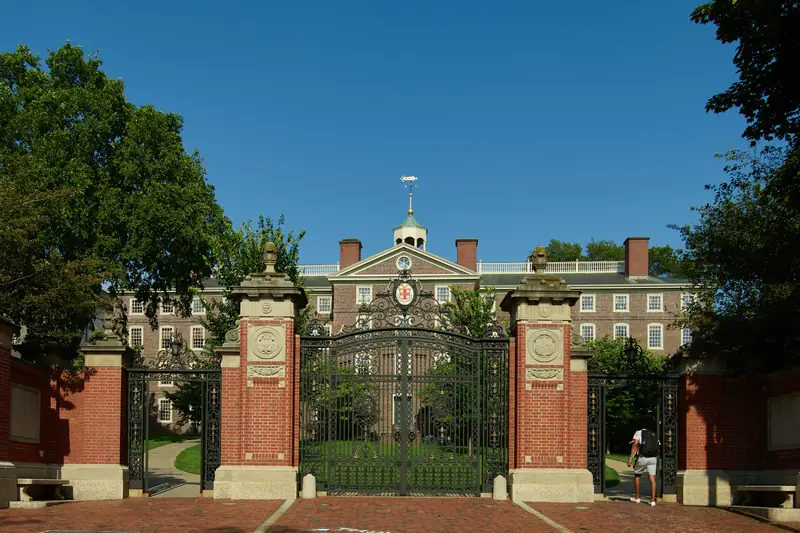
Providence, USA
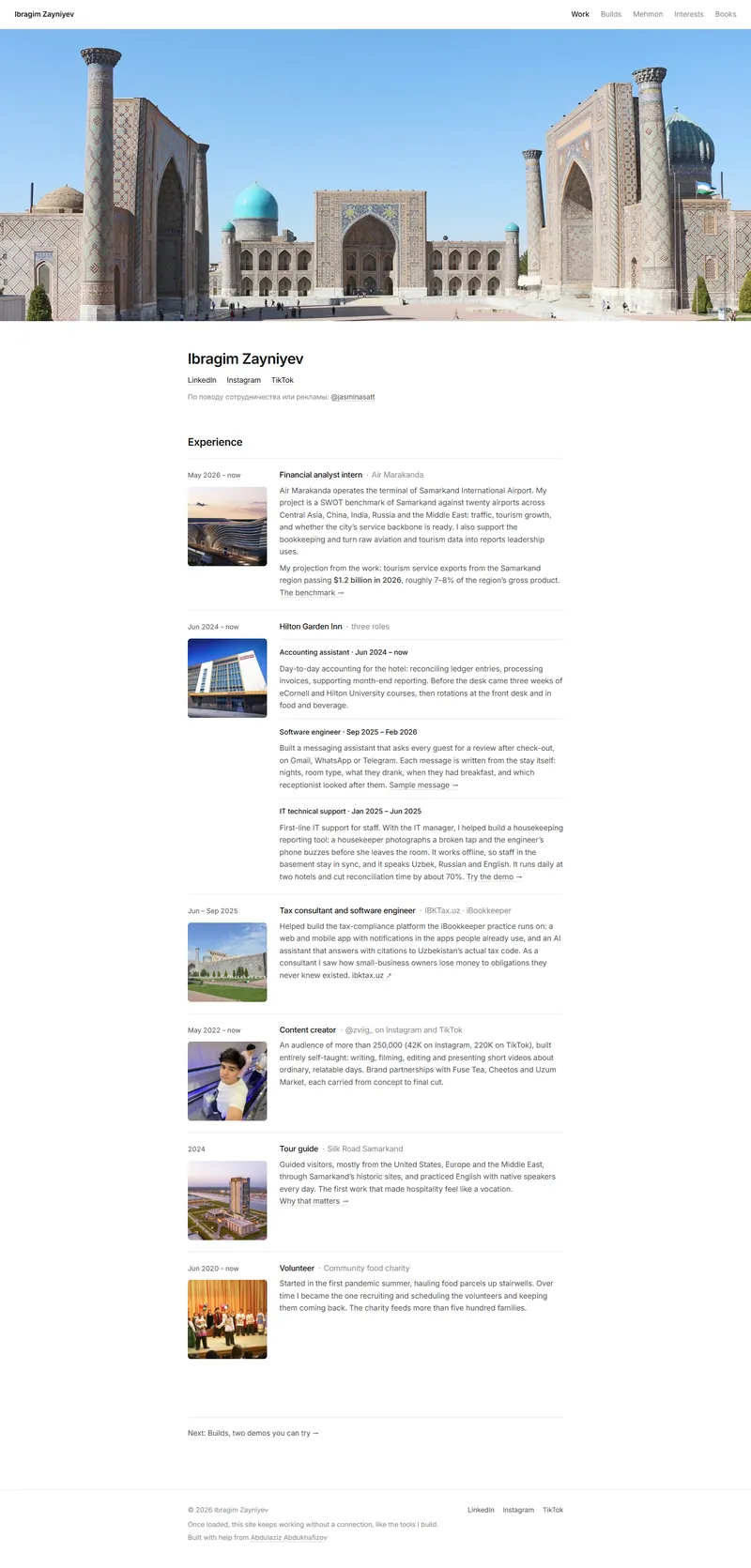
An Ivy League university in Providence, Rhode Island, founded in 1764.
Photo: Carol M. Highsmith · Public domain (photo source and license, opens in a new tab)
Admitted
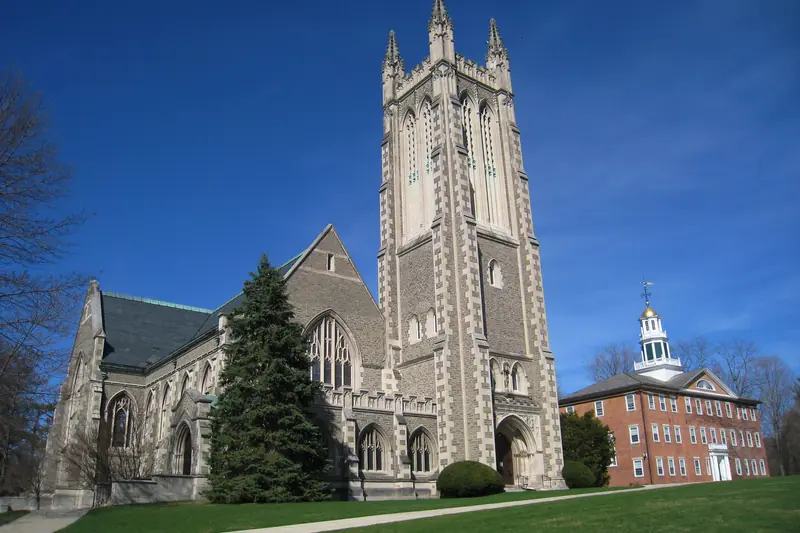
Williamstown, USA
A liberal arts college in the Berkshires of Massachusetts, founded in 1793. Its Oxford-style tutorials pair two students with a professor.
Photo: Daderot · Public domain (photo source and license, opens in a new tab)

Admitted
Pittsburgh, USA
Founded by Andrew Carnegie in 1900. His words became its motto: “My heart is in the work.”
Photo: Cbaile19 · CC0 (photo source and license, opens in a new tab)

Admitted
Brunswick, USA
A liberal arts college in Maine, chartered in 1794. Nathaniel Hawthorne and Henry Wadsworth Longfellow both graduated in 1825.
Photo: Daderot · Public domain (photo source and license, opens in a new tab)
Admitted
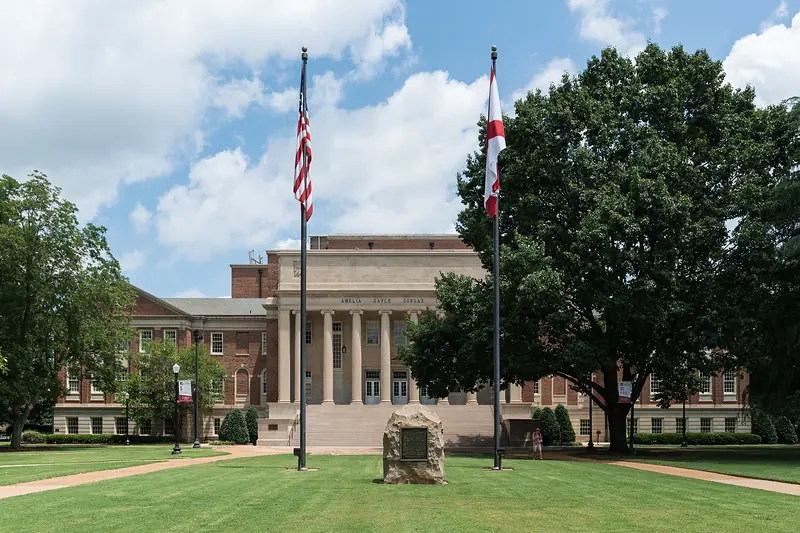
Tuscaloosa, USA
The state’s flagship university, opened in 1831 as Alabama’s first public college.
Photo: DXR · CC BY-SA 4.0 (photo source and license, opens in a new tab)

Admitted
Seoul, South Korea
Rooted in 1885, and one of Korea’s oldest private universities. The Y in “SKY,” Korea’s shorthand for its three most sought-after universities.
Photo: Christian Bolz · CC BY-SA 4.0 (photo source and license, opens in a new tab)

Admitted
Seoul, South Korea
Founded in 1905 as Bosung College. The K in “SKY.”
Photo: Mannaa mohamed · CC BY-SA 4.0 (photo source and license, opens in a new tab)

Admitted
Tel Aviv, Israel
A public research university in Ramat Aviv, in the north of Tel Aviv, founded in 1956.
Photo: יעקב · CC BY-SA 4.0 (photo source and license, opens in a new tab)
How we count Total scholarships: the scholarships and financial aid our students were awarded at the 22 named universities they go to. We count need-based financial aid as a scholarship too, because most of these universities are need-aware for international students, so financial aid is part of the admission decision itself. Universities in China, Qatar, and the UAE are not counted.
The extracurricular engineThe engine
An admissions reader can tell a title from a contribution. We build contributions, inside large global firms across six sectors.
Four formats
Hospitality at global scale
A student might
Study how one room is priced across a season, or redesign a guest’s first ten minutes, from the curb to the key card.
Networks, schedules, and safety, across borders
A student might
Model a new route out of Samarkand, or trace how one delayed departure ripples through a day of connections.
Logistics and flow at the scale of a city
A student might
Follow a passenger from check-in to gate to find the minutes worth saving, or map the unseen route of a suitcase.
Engineering and planning on large builds
A student might
Shadow the engineers on a large build, and learn how a schedule survives budgets, inspections, and weather.
Products, code, and the teams that ship them
A student might
Ship a small feature with a real team, or interview users and turn what they say into a product brief.
The physical internet
A student might
See where the cloud physically lives, and study what keeps it running: power, cooling, and every minute of uptime.
Illustrative examples. Every project is scoped around the student and the firm.
We don’t publish firm names. We discuss them in consultation.
The mentor network
Mentors, alumni, and current students of leading universities in thirteen countries on five continents. They have made the choices you are about to make.
United States
student
English
Canada
étudiant
French
Italy
studente
Italian
Poland
uczeń
Polish
Egypt
تلميذ
tilmīdh
Qatar
طالب
ṭālib
United Arab Emirates
طالب
ṭālib
India
विद्यार्थी
vidyārthī
Malaysia
pelajar
Malay
China
学生
xuésheng
South Korea
학생
haksaeng
Australia
pupil
English
Uzbekistan
Universities in Samarkand & Tashkent
talaba
Uzbek
“Student,” in the languages of our network.
“In my perspective, the most paramount thing is to commence the preparation at the earliest stage possible. I was procrastinating my essay until November and it was not an optimal decision. Please utilize your summer efficiently.”
Aziza S. First-year student South Korea
“Do not attempt to fabricate a persona which is not authentic. Admission officers can perceive it immediately. Instead, articulate your genuine intellectual curiosity, even if it seems trivial for you.”
Sardor G. Second-year student United States
“Furthermore, I want to emphasize that a rejection is not a reflection of your value as an individual. I received many rejections, nevertheless I am thriving now. Resilience is a very crucial component of this process.”
Azim A. First-year student Qatar
“My recommendation is to establish a consistent routine for the SAT. Two hours daily is more beneficial than ten hours in one weekend, because the cognitive retention is significantly enhanced.”
Michael Sh. First-year student Italy
“When you are writing the supplemental essays, conduct a comprehensive research about the university. Mention specific professors and courses, because generic statements are not demonstrating your fit.”
Sherzod Sh. Second-year student China
“Utilize your mentor. Ask the questions which you consider naive. I was hesitant to disturb my mentor, which was a huge misconception, because they are eager to facilitate your progress.”
Timur B. First-year student Malaysia
ScoreMarch Academy · Student SAT results
Median 1450 across 46 students since December 2022 n = 46. Every score below comes from an official College Board report.
Reports couldn’t load. See every report on the Results page.
On this wall
Each dot is one report with a total score (one report shows a section score only); the four above are highlighted. Reports, not students: one student appears twice, before and after a retake. The wall shows the reports published so far; the track statistics cover 46 students since December 2022. The median on this wall is 1400; the 1450 track median covers all 46 students, including reports not published here.
Names are shortened on the cards, and Record Locators are hidden on every report.
SAT® is a trademark registered by the College Board, which is not affiliated with, and does not endorse, this website.
From the instructor’s notebookThe notebook
Two practice tests a day. A Reading and Writing score that climbed from the 400s to 710. When the scores came in, our SAT instructor wrote a few lines about the students behind them.
Curiosity
“By far the most passionate student I have had. She asked questions I could not answer; at times it felt as if she should be teaching me. Great reasoning, and the first from the October–December group to score 700+.”
Discipline
“Very humble and very hard-working. He completed two practice tests a day, every day, until his exam.”
Comeback
“He joined my January–March group with a Reading and Writing score in the 400s. Through immense effort and discipline, he made an impressive comeback: 710.”
Belief
“I never underestimated him. His 1500 came on his first attempt.”
The notes couldn’t load. Read them on the Results page.
Lightly edited from the instructor’s notes. Names shortened for privacy.
Read the instructor’s notesQuestions, answered
Straight answers on guarantees, cost, timing, integrity, and privacy.
No. Universities decide admission, and no one can honestly promise it. We commit to the work: a clear strategy, real experience, and essays in your own words. The only thing we guarantee in writing is an SAT score, through ScoreMarch Academy, with terms fixed in the contract before lessons begin.
You do, every word. We ask the questions that find the story, challenge every draft, and refine it with you, line by line.
Admissions engagements are scoped and priced after your consultation, because no two students need the same work. The Academy has two fixed plans: Base guarantees 1350+ and Advanced guarantees 1450+, with terms fixed in the contract before lessons begin. We share the fees on request.
The earlier you start, the deeper the work can go. Three or four years before you finish school, there is time to build. Two years out is very workable. In the final year, we focus on strategy, essays, and applications.
Projects, internships, shadowing, and applied research inside global firms valued at $70 billion or more, in hospitality, aviation, airports, construction, software, and data centers. Each project is scoped around the student’s interests. We don’t publish firm names; we discuss them in consultation.
No. We are based in Samarkand, and we work online with students anywhere. Our students have been admitted in seven countries: the USA, South Korea, Italy, Israel, China, Qatar, and the UAE.
The SAT is taught separately, by ScoreMarch Academy: one-on-one, with an instructor who superscored 1580. You can work with one house or both. The score guarantee is fixed in the contract before lessons begin, and the Academy takes a student on only when it can see the way to the stated score. When it can’t, it says so plainly and takes no money.
Because we take a small number of students each season, and each one works with the people doing the work. Join the waitlist, and we’ll write to you about a seat.
Yes. ScoreMarch is well suited to families who value privacy. Sessions are one-on-one, each season is small, and we never share your information with universities, firms, or mentors without your permission. Results on this site show only a first name and last initial. The privacy notice has the details.
Have a question we haven’t answered? Ask it in your consultation.
Book a consultation More admissions questionsBegin
Tell us who you are in the dossier and choose a time to meet, or join the waitlist. We keep each season small, so every student works with the people doing the work.
Each season is small by design.
Seats
Prefer to write first? abdulaziz@nycmail.com


